
Gull Beach
The Clouds
The Beachcombers
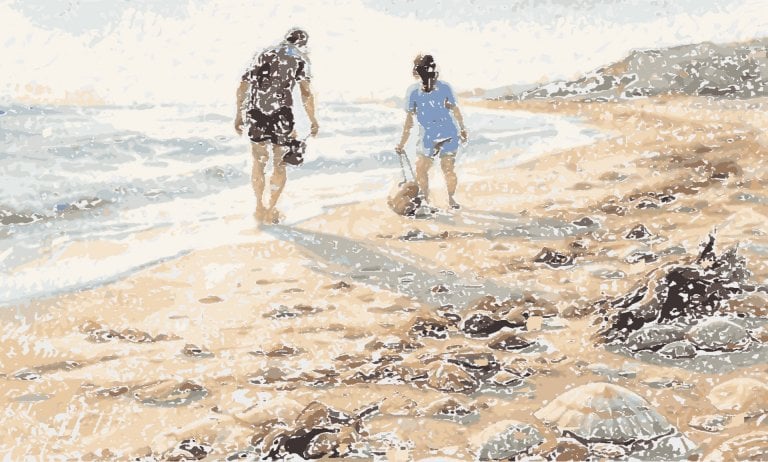
Some people were walking slowly along the beach. They had already walked quite a distance by the time they passed Philo. Their footprints stretched behind them in the softened sand. Every now and then, they would stop, bend down, pick something up, or dig a small hole. A little further along, they stopped again and pulled something half-buried from the sand—it was an old child’s plastic bucket. Its once bright colour had faded with sun, salt, and time. It had probably been left behind after a day of play, forgotten in the excitement. One of them rinsed the bucket in the sea; afterward, it became useful. They began placing other small things they found into it as they continued along the beach. Philo watched them with interest—he had seen people do this before. Some walked past without noticing anything at all, while others seemed to search the sand carefully as they moved along. Philo was never quite sure what they were hoping to find. He knew the sea took many things away: toys, coins, pieces of rope, and all sorts of other objects disappeared beneath the water or were buried beneath the sand. But the tide also brought things back, and each time the sea moved out again, something different might be revealed. Further along the beach, near another entrance, stood a short stone wall. On top of it lay a small collection of objects people had found, and over time they had gathered into a curious little pile. There were shells and smooth pebbles, small toys, a key ring, and even a pair of old sunglasses. Interestingly, there was a waste bin standing only a few steps away, yet people did not place these things there but instead left them on the wall. Philo found this puzzling. He watched the beachcombers moving slowly across the sand, looking for things the tide might have uncovered. There seemed to be something about the finding of things that mattered. The tide covered things; the tide revealed things. And the beachcombers knew that if you wanted to discover what the sea had left behind, Gull Beach was a good place to look once the tide had gone out.
Gull Beach
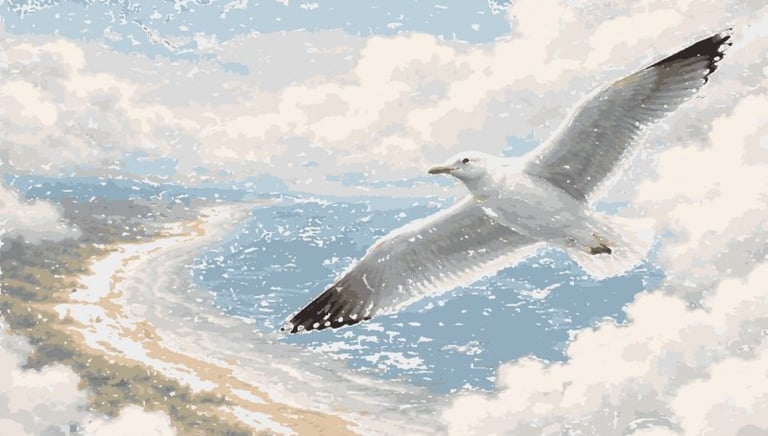
Philo, a seagull, often begins his day high above Gull Beach. From the air, he can see the whole stretch of shoreline. The dunes form a pale ridge along the land, the sand spreads out below, and the sea moves slowly against the edge of the beach. From up here, it is difficult to see the details. People appear as small moving shapes. The things scattered across the sand are only faint marks in the distance. But Philo knows the beach well. When he drifts above it long enough, he begins to notice the small patterns that make Gull Beach what it is. Some things appear only briefly before the tide carries them away again. Others remain long enough for people to expect them each time they return. Children sometimes build sandcastles near the water. Rockpools gather quietly among the darker stones further along the shore. Now and then, the tide leaves something unexpected behind on the sand. And near the dunes, certain familiar shapes stay in place long enough to become part of the beach itself. Philo spends many days watching these things. What follows is simply one of those days.
The Rockpool
The Clouds
High above Gull Beach, Philo drifts on the warm rising air, his wings stretched wide as the breeze carries him slowly across the sky. The clouds move gently around him, and the effort required to remain here is very small. From time to time, he glances down through a break in the cloud at the beach that lies far below. From this height, it looks simple—a pale band of sand, the darker line of the dunes, and the quiet edge of the sea where the details are still hidden. Up here, it would be easy to remain for a while longer—the air is steady, and the world below seems far away. Philo has spent many mornings like this, but he also knows something else about Gull Beach: the beach is where the day happens. Sooner or later, he will need to leave the clouds and come closer to the sand below. For a short while longer, he drifts quietly. Then he tilts one wing; the air beneath him changes, and he begins to glide downward. The clouds slowly fall away behind him, and the beach grows clearer. And the day at Gull Beach begins.
The Fence
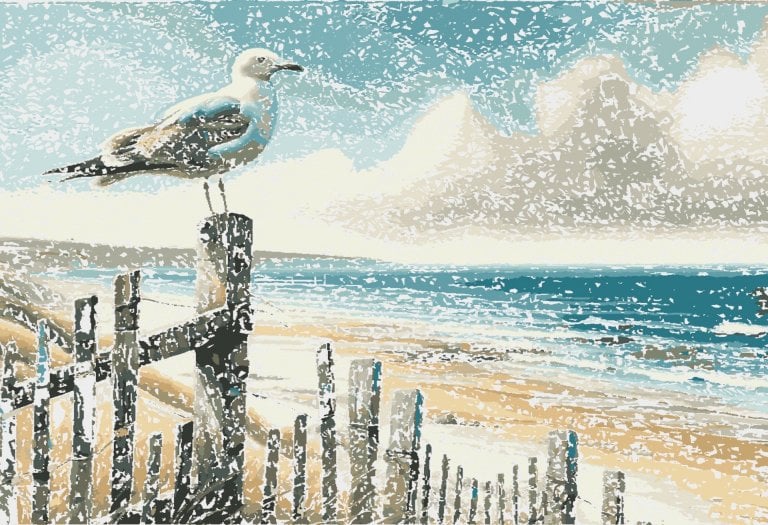
At the edge of the dunes stands a long wooden fence. Philo glides toward it and settles on one of the posts. From here he can see the beach more clearly. People walk slowly along the sand and the sea continues its steady movement against the shore. The fence sits in an unusual place. Behind it lie the grasses and quiet slopes of the dunes. In front of it stretches the open beach. The fence belongs fully to neither. Philo often pauses here before flying further down to the sand. From the post he can watch the beach without yet joining its movement. It is a good place to look and take in the day before deciding where to go next. After a while he lifts his wings again and glides down toward the sand below.
The Fence
The Sandcastle
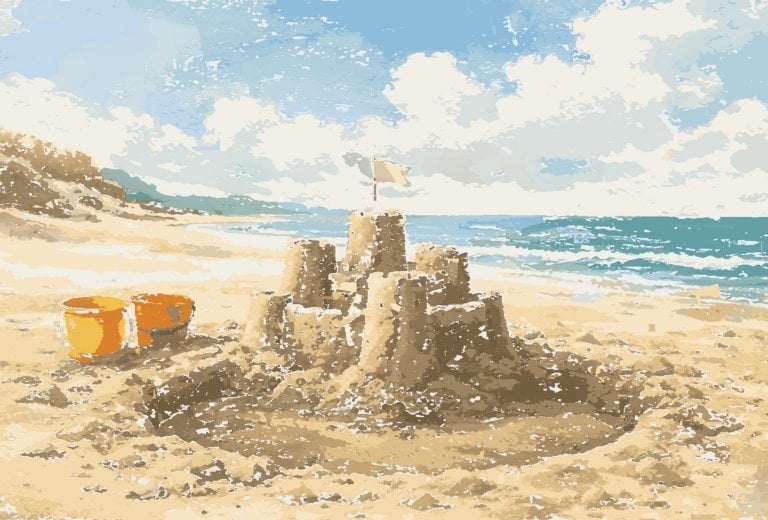
As Philo moves out across the beach, a burst of laughter rises from the sand where the sound carries easily through the air. Below him are some children playing together in the sand. They have buckets and small tools scattered around them as they shape a sandcastle. Philo circles once before settling nearby to watch. The children work together, pressing wet sand into towers and walls. Small shells and pebbles are pushed into the sides for decoration. Around the castle, they dig a wide moat in the damp sand. The moat needs water, and soon the children begin running back and forth between the sea and their castle. Each time they reach the water, they fill their buckets and hurry back again, trying not to spill too much along the way. By the time they return, only part of the water remains in their buckets. What little is left is poured immediately into the moat, where the water disappears almost as quickly back into the sand. The moat never seems to fill. Philo watches as the children repeat the journey again and again. They run faster each time, laughing as they go, but still the moat drains away—though laughter does not. Eventually, the castle stands complete. A small paper flag is placed proudly on the highest tower. The children step back to admire their work. Philo knows something about the sea: sooner or later, the tide will return and the water will reach the castle walls. The towers will soften and slowly fall back into the sand. But the children do not seem concerned with that just now. For the moment, the castle stands, and the laughter that built it continues to drift across the beach.
The Sandcastle
The Rockpool
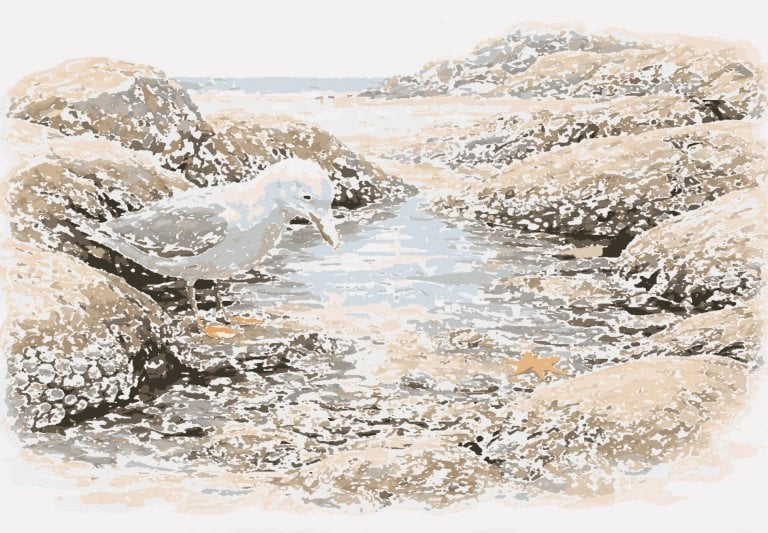
Further along the shoreline, the sand begins to give way to darker rocks. Philo glides part of the way down the beach before landing nearby. From there, he walks carefully across the sand toward the rocks. Among them lie several pools of seawater left behind by the retreating tide. From a distance, the pools appear still, reflecting the sky above them. Philo steps closer and looks down into one of them. At first, the water seems empty, but then something moves. A small shrimp darts suddenly across the pool before disappearing again. A tiny crab shifts sideways across the sand at the bottom. A flash of silver reveals a small fish turning sharply before vanishing behind a stone. The longer Philo watches, the more movement he begins to notice. Each tide quietly refreshes these pools. New water arrives, bringing small creatures with it from the sea. By the next tide, many of them will be gone again.
The rocks themselves remain in place. Year after year, the pools appear in the same places. Yet what they contain is rarely the same twice. From time to time, the tide leaves other things behind as well—a shell, a smooth piece of glass, or something that has travelled from an unknown place much further away. Philo has learned that rockpools are like this. They often look still at first but rarely stay that way for long
The Tree
The Tree
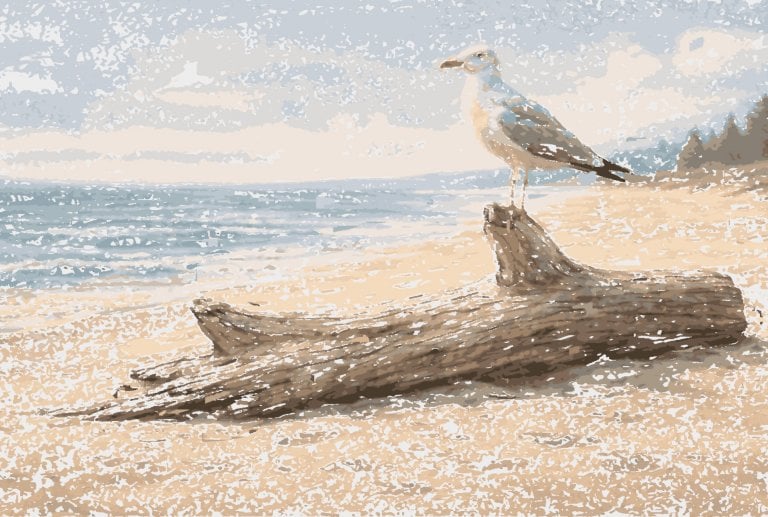
Not far along the beach lies the trunk of a large tree that Philo had noticed before landing nearby. From the sand, next to Philo, the tree appears even larger still. Its long trunk stretches across the beach, worn smooth by water and weather. The branches and bark are gone, leaving only the pale wood behind. However it arrived here, he thought, it must have travelled some distance. Philo walks a little closer. Although the tree does not belong to the beach, people seem to treat it as though it does. Some sit along its length while looking out to sea. Others pause beside it before continuing their walk. Children climb over it before running back across the sand. The tree simply rests where the tide has left it.
Yet Philo has noticed that it does not remain entirely still. With each tide, its position changes slightly. Some days it lies a little further up the sand. Other days the sea reaches it again and rocks it gently before the water retreats. The movement is slow and easy to miss, but for now the tree remains part of Gull Beach. How long it will stay, he thought, is another matter.
The Wheel
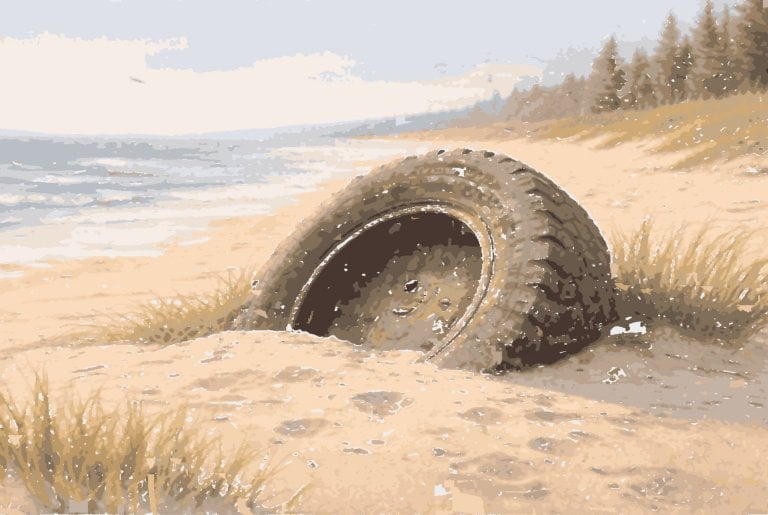
Near the dunes, partly buried in the sand, lies an old tractor wheel. Philo spots it easily from the air before gliding down toward it. The dark circle stands out against the pale sand. Only the upper part is visible; the rest seems to be hidden beneath the sand. The thick rubber tire still surrounds the metal rim. The paint that once covered it has faded with time, leaving only faint traces of colour behind. People walking along the dunes seem to recognize it. Some slow slightly as they pass, glancing toward it before continuing along the beach. Others use it as a quiet point of reference as they move along the shoreline.
Philo has seen the wheel here for many seasons. Over time, it has become a familiar landmark along this part of Gull Beach. Those who walk this stretch of sand seem to expect it to be there. And yet it clearly did not begin its life here. Once, it must have belonged to something else entirely—a machine of some kind, working far from the beach.
Now, it rests quietly here. Much of it remains hidden beneath the sand like a mystery where only the upper part can be seen. For now, the wheel appears solid and dependable. But Philo also knows how Gull Beach changes. Wind moves the sand. Storms arrive from time to time. Things that seem fixed can slowly shift without much notice. The wheel may remain here for many years. Or one day, perhaps it will be gone and may never return. For now, though, the wheel stays where it is—one of the things Philo has come to recognize each time he passes this way.
The Edge
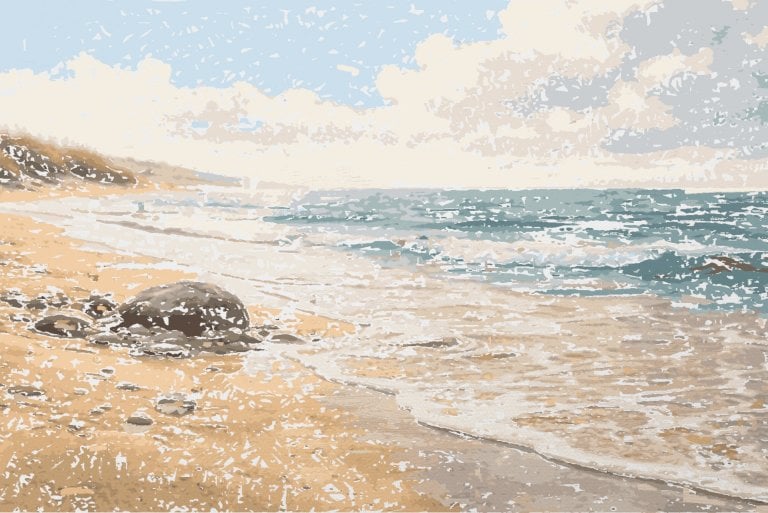
Where the sand meets the sea, the tide is always moving. Each day the water advances steadily up the beach, and then it draws back again, slipping slowly toward the horizon. The movement never seems to stop. The rhythm of the tide is like the heartbeat of Gull Beach, and like a heart, its pace can change. But Philo has noticed that there are moments — short ones, if you stop and watch — when something different happens. He has noticed a special moment when the tide reaches a quiet balance. At this moment the sea rests against the sand, no longer advancing but not yet retreating either. The water continues to move and breathe, but the shoreline itself holds a pause. Philo has come to recognise this place — this pause — and he calls it The Edge, or sometimes the Quiet Edge. When he senses the Edge arriving, he moves as close to it as he can. He has to watch the water and the sand carefully so as not to miss its subtlety, because the Edge arrives quietly and lasts only a short time. Philo likes the Quiet Edge when it appears. Even though it is brief, he knows that if it lasted any longer, it would not be the same. For Philo, it is this shortness of time that makes the moment what it is. From here — from the Edge — the whole beach stretches out behind him. The dunes, the rocks, and the long line of sand lie quietly under the open sky.
Somewhere along that shoreline are the things he has seen during the day. The sandcastle will soften when the tide returns. The rockpools will refill and empty again. The tree may remain for a while, or drift away. The wheel may sit for years before the beach slowly shifts beneath it. Standing at the Quiet Edge, the pattern of Gull Beach becomes easier to see. Everything here is part of movement. The tide shows it clearly. For a short while the sea holds its place between leaving and returning. Then, almost without notice, the balance begins to change. The water starts to move again. The tide turns. Philo lifts his wings and lets the wind carry him back out over the beach. And Gull Beach continues to change, just as it always has.
And tomorrow, the beach will be there again.
The Beachvombers
The Rockpool
The Wheel
The Edge